 Send Inquiry
 Send Inquiry
Industrial Vertical Casting Machine
Industrial Vertical Casting Machine Specification
- Power Rating
- 15 kW
- Operating Temperature
- 0C to 45C
- Voltage
- 380 V
- Accuracy
- 0.03 mm
- WorkingSpeed
- Adjustable, up to 18 cycles/min
- Noise Level
- Below 76 dB
- Lubricating System
- Automatic Lubrication
- Motor Power
- 11 kW
- Drive
- Hydraulic
- Machine Type
- Casting Machine
- Frame Type
- Heavy Duty Steel Frame
- Cooling System
- Water Cooled
- Frequency
- 50 Hz
- Control System
- PLC Controlled
- Connectivity Options
- Ethernet, USB
- Product Type
- Vertical Casting Machine
- Power Source
- Electric
- Operating Type
- Manual/Automatic
- Power
- 15 kW
- Pressure
- Up to 150 Ton
- Surface Treatment
- Painted
- Dimension (L*W*H)
- 2200 x 1600 x 3200 mm
- Weight (kg)
- 3500 kg
- Usage & Applications
- Metal casting for industrial components, auto parts, and machinery fittings
Industrial Vertical Casting Machine Trade Information
- Minimum Order Quantity
- 1 Unit
- Payment Terms
- Cash in Advance (CID), Cheque, Cash Advance (CA)
- Supply Ability
- 1 Unit Per Month
- Delivery Time
- 4 Week
- Packaging Details
- Wooden Box Packaging.
- Main Export Market(s)
- Eastern Europe, Western Europe, Africa, Australia, Middle East, South America, Asia, North America
About Industrial Vertical Casting Machine
We are counted amongst the leading manufacturers, suppliers and exporters of Industrial Vertical Casting Machine. Available in different models and technical specifications, these machines are manufactured in compliance with global quality standards. Our team of quality inspectors consistently checks our products on various parameters to ensure their flawlessness. To deliver error free and zero physical damage range, we pack this Industrial Vertical Casting Machine using high-grade packaging materials. Some features of this product are as follows:
- Noise free operations
- Sturdy construction
- Low maintenance
- Rust proof
-
Machine Range/ Model
Power Rating (KVA)
Cruc. Capacity
Rod Dia. (Min-Max.)
Max. No. of Dies
Max. No. of Strands
Melting / Casting Capacity
Max. Temp.
Typical Application
VVC-60
80
400
8-40
2
2
60
1400
ROD & TUBE
VHC-90
125
600
8-40
3
3
90
1400
VHC-120
170
1000
8-40
4
4
120
1400
Precision Casting for Industrial Excellence
This vertical casting machine delivers accurate and repeatable results for metal components, auto parts, and machinery fittings. Its adjustable working speed and PLC-controlled operations ensure flexibility for varied production needs while maintaining high standards of accuracy and consistency in every cycle.
Designed for Reliable Durability and User Safety
Built with a heavy-duty steel frame and robust water-cooling system, the machine handles intensive casting operations efficiently. The automatic lubrication and noise reduction features reduce wear and provide a safer, quieter workplace. Versatile control options cater to both manual and automated operational modes.
Connectivity and Smart Operation
Featuring Ethernet and USB connectivity, the casting machine integrates seamlessly into modern industrial networks for streamlined monitoring, diagnostics, and data transfer. The adjustable speed and precise control system maximize operational productivity and compatibility across different production environments.
FAQs of Industrial Vertical Casting Machine:
Q: How does the PLC-controlled system enhance casting accuracy in this machine?
A: The PLC-controlled system manages all critical casting parameters, minimizing operator error, and ensuring consistent quality. It allows precise adjustment of the working speed, which combined with controlled hydraulic drive, delivers an accuracy of 0.03 mm for every casting cycle.Q: What is the recommended usage for this vertical casting machine?
A: This machine is ideal for industrial-scale metal casting, including the production of auto parts, complex machinery fittings, and other high-precision components for manufacturers, exporters, and suppliers.Q: What is the operational process for casting with this machine?
A: Operators can choose manual or automatic modes, set desired speed cycles, and monitor the casting process via the PLC interface. The hydraulic drive ensures stable pressure application, while the water cooling and lubrication systems maintain optimum working conditions and extend machine life.Q: When is routine maintenance required for the machines automatic lubrication and cooling systems?
A: The integrated automatic lubrication system reduces the need for frequent manual intervention, but it is advisable to check the lubrication and water cooling levels at regular intervals (monthly or as per operational hours) to maintain peak performance.Q: Where can this casting machine be installed for optimal function?
A: It is best suited for industrial environments with stable electric supply (380 V, 50 Hz), adequate water for cooling, and sufficient space to accommodate its dimensions (2200 x 1600 x 3200 mm). Factory floors or workshops engaged in bulk metal component production are ideal locations.Q: What are the benefits of using a water-cooled hydraulic casting machine compared to conventional systems?
A: Water cooling effectively regulates operating temperature from 0C to 45C, preventing overheating during high-pressure casting. This results in longer machine lifespan, consistent performance, and reduced risk of component distortion.Q: How does Ethernet and USB connectivity improve machine operation for manufacturers and exporters?
A: Ethernet and USB interfaces enable quick data transfer, remote monitoring, and diagnostics. This enhances production management, facilitates troubleshooting, and allows seamless integration with industrial automation systems.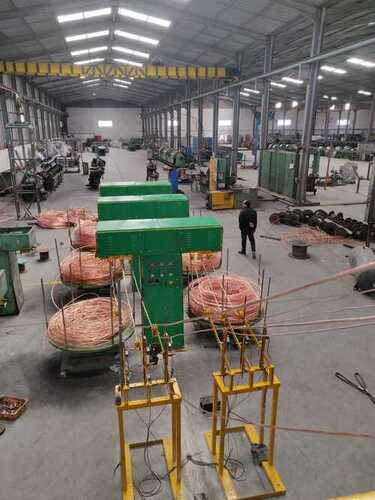

Price:
- 50
- 100
- 200
- 250
- 500
- 1000+

More Products in Vertical Casting Machines Category
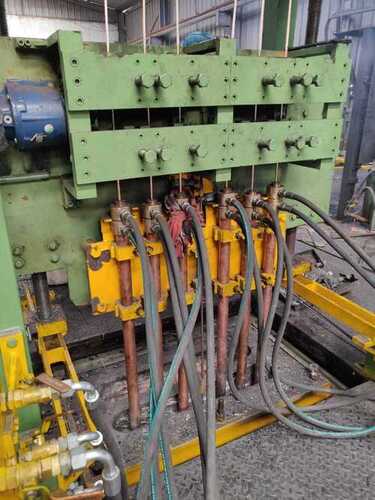
Vertical Casting Machine system
Price Range 100000.00 - 500000.00 INR / Unit
Minimum Order Quantity : 1 Unit
Control System : Other, PLC Control
Power Source : Other, Electric
Product Type : Other, Vertical Casting Machine System
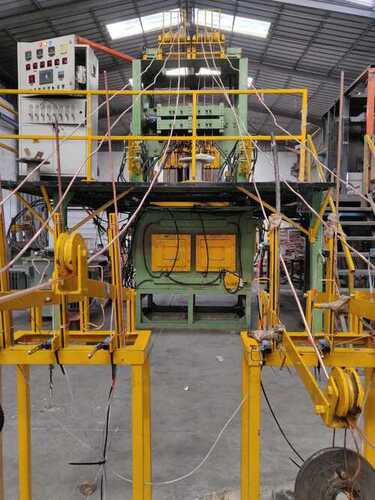
Vertical Continuous Casting Machines
Price Range 10000.00 - 100000.00 INR / Unit
Minimum Order Quantity : 1 Unit
Control System : Other, PLC Controlled with HMI
Power Source : Other, Electric
Product Type : Other, Vertical Continuous Casting Machine
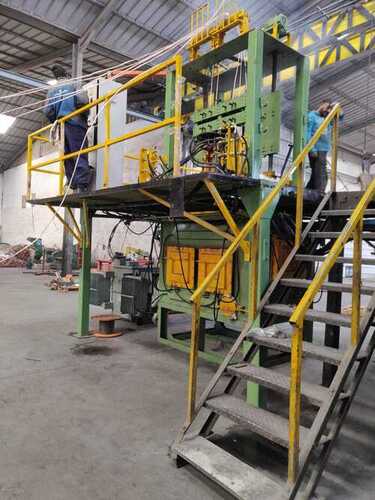
Heavy Duty up ward Casting Machine
Price 100000.00 INR / Unit
Minimum Order Quantity : 1 Unit
Control System : Fully Automatic
Power Source : Electricity
Product Type : Other, Heavy Duty up ward Casting Machine
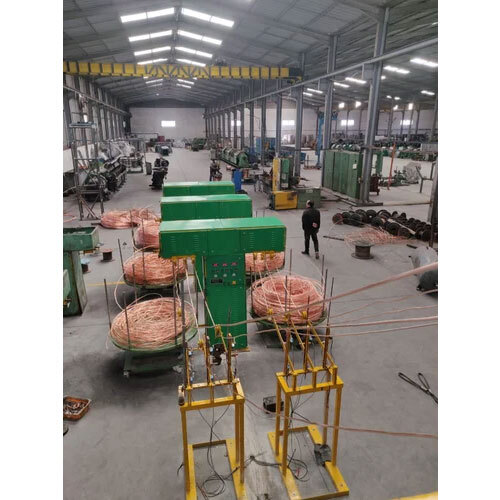
Upward Copper Casting Machine
Price 100000 INR / Piece
Minimum Order Quantity : 1 Piece
Control System : Fully Automatic
Power Source : Electricity
Product Type : Other, Upward Copper Casting Machine

 Send Inquiry
Our Products
- Horizontal Casting Machines
- Vertical Casting Machines
- Jewelery Casting Machinery
- Drawing Machinery
- Graphite Crucibles
- Cast Iron Rod
- CI Casting Rod
- Casting Rod
- Ductile Iron Rod
- Cast Iron Round Bar
- Annealing Furnace
- Briquetting Machine
- Continuous Casting Machine
- Graphite Blocks
- Graphite Moulds
- Graphite Products
- Heating Elements
- Muffle Furnace
- Rod Straightening Machine


 Send Inquiry
 Send SMS
Developed and Managed by Infocom Network Private Limited.
